Cham Dhavi Monument in Lamphun A Visual Guide to Public Memory
Observe the statue, setting, and living civic meaning of Queen Camadevi’s memorial in Lamphun
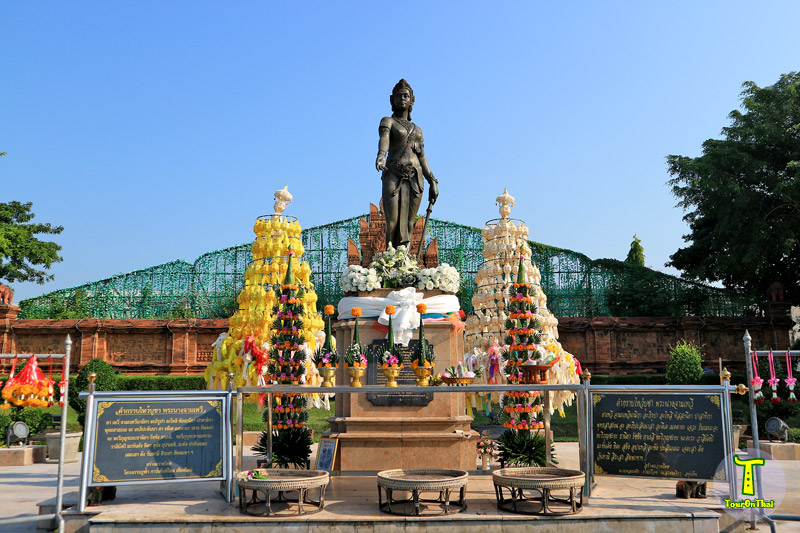
At the Cham Dhavi Monument in Mueang Lamphun District, Lamphun, the first impression comes from the relationship between the statue and the space around it. The monument presents a formal image of Queen Camadevi, while its open civic setting allows everyday movement, brief visits, and acts of remembrance to occur side by side. Visitors may encounter the figure under very different conditions: a quiet morning, a family visit, a cultural excursion, or a short stop within a wider northern Thailand journey. Each situation changes what the eye notices. The title appears in several forms, including Queen Cham Dhavi Monument, Camadevi Monument, Queen Camadevi Statue, Camadevi Statue, and Phra Nang Chamthewi Statue. These names point to the same historical figure and reflect variations in transliteration and local usage. This guide approaches the site as a work of public memory. Its focus is visual attention, civic meaning, respectful conduct, and the way a commemorative statue fits into a day of Lamphun Tourist Attractions.
Start With the Space Around the Figure
Before concentrating on the statue itself, take in its placement. A monument communicates through distance, height, surrounding pavement, nearby activity, and the direction from which people approach. These features establish whether the figure feels ceremonial, welcoming, imposing, or integrated into ordinary city life. The Cham Dhavi Monument can therefore be observed as an arrangement of public space as well as a representation of a queen.
Stand for a moment at a comfortable distance and notice the outline against the background. Then look at the base, the ground immediately around it, and the routes people use through the area. Such details reveal how commemoration has been organized for public visibility. The site is legible even to a visitor who arrives without extensive historical preparation: a named figure occupies a central visual role, and the surrounding space directs attention toward remembrance.
This approach also prevents the visit from becoming a hurried portrait stop. A photograph records the image, but observation includes scale, atmosphere, and the presence of other people. The monument’s meaning is partly carried by the way a public setting makes the queen available to residents and visitors alike.
Look for the Language of Royal Representation
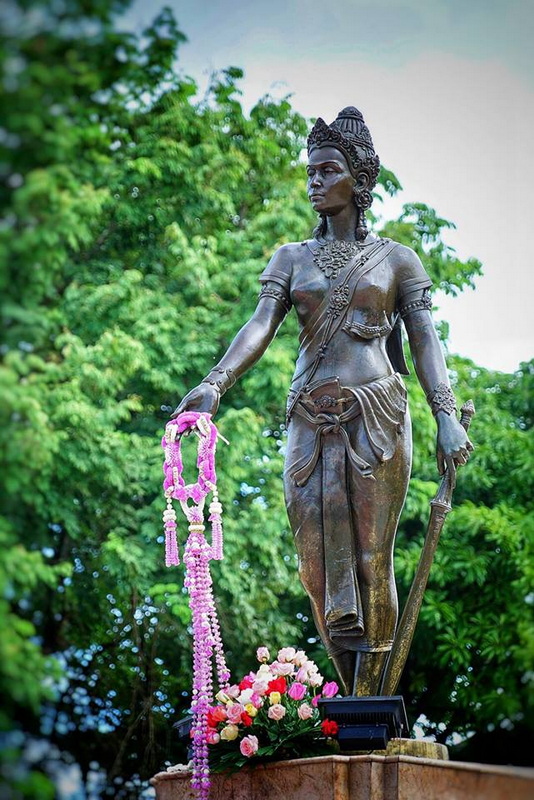
The statue’s clothing, posture, facial expression, and accessories deserve close attention. These elements are not decorative details chosen at random; together they shape an image of authority and dignity. A viewer can ask what kind of leadership the representation suggests, how the figure is separated from the surrounding space, and which visual details encourage solemnity.
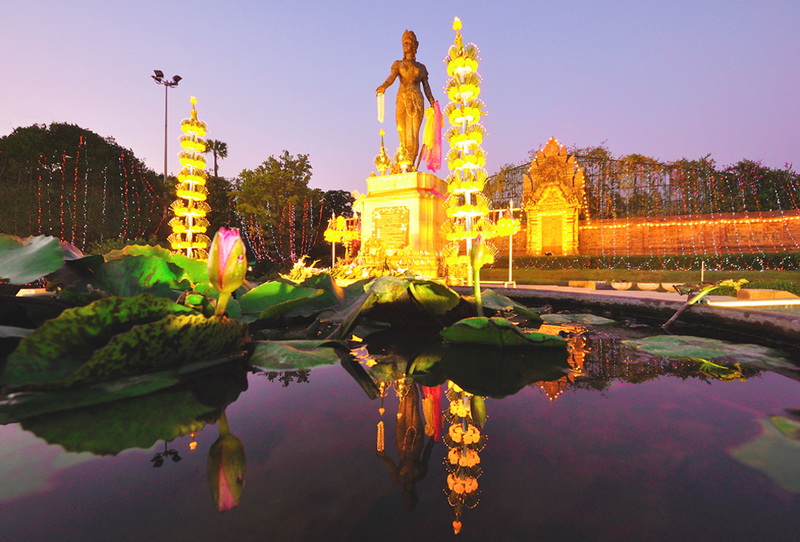
The title Phra Nang Chamthewi Statue is especially useful when considering the image as a formal representation of a revered female ruler. Queen Camadevi is associated with the early history of Lamphun and with the Hariphunchai tradition. The monument does not provide a complete historical account on its own, yet it gives that tradition a visible form. The statue turns a name remembered in chronicles, local narratives, and cultural identity into a figure encountered in the present.
Observe the monument without assuming that every feature has one universally agreed interpretation. Public images can gather historical, religious, regional, and civic meanings at the same time. A respectful reading leaves room for that layered quality.
Understand Why the Monument Has Several Names
Travel research may produce Cham Dhavi, Chamadevi, Camadevi, or Chamthewi. English spellings differ because Thai names can be transliterated in multiple ways, and older as well as newer conventions may circulate together. Queen Camadevi and Queen Cham Dhavi refer to the same remembered ruler in this context; the variations do not indicate a collection of unrelated monuments.
The name Camadevi Monument is common in English-language descriptions, while Phra Nang Chamthewi Statue emphasizes the honorific and the sculptural image. Camadevi Statue and Queen Camadevi Statue are shorter search terms that may appear in travel notes or map references. Knowing this vocabulary helps visitors connect what they read before arrival with what they see on site.
Names also show how heritage travels between communities. A local title, a historical spelling, and a tourism label may coexist without one cancelling the others. Treating the variations as part of the monument’s public life gives the visitor a more accurate understanding of how regional memory is communicated.
Notice the Monument as a Working Civic Image
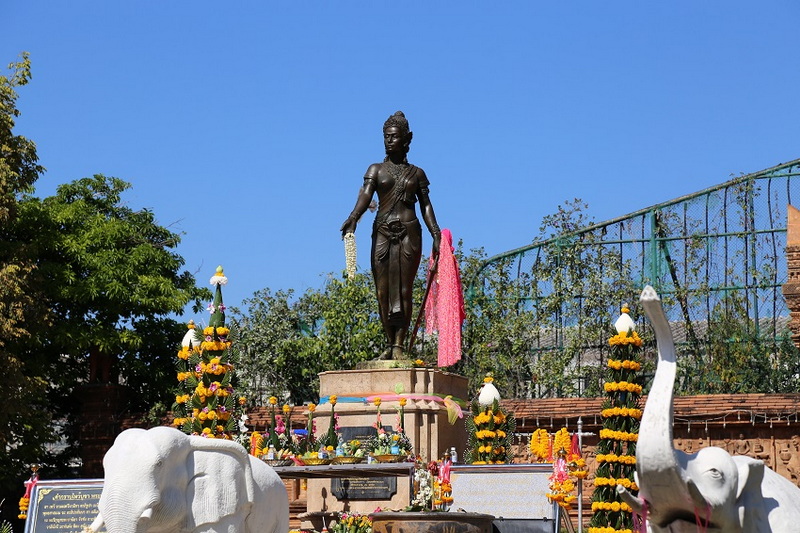
A commemorative statue remains active whenever people use it as a point of orientation, remembrance, or public expression. Its role may include ceremonies, quiet offerings, family photographs, educational visits, or simple recognition during daily travel. The exact activity can change, but the underlying function is consistent: the image keeps a historical figure present within contemporary Lamphun.
That civic role is important because the monument belongs to more than a single historical period. Queen Camadevi represents a foundation story connected with the identity of the region, while the statue belongs to modern public life. Visitors can watch how people approach, where they pause, and whether the space encourages formal gestures or brief acknowledgment. These observations are often more revealing than a long list of dates.
For a culture-focused traveler, the most valuable question may be how heritage is made visible in an everyday environment. The answer is found in the meeting of symbolic authority and ordinary movement: the statue stands as a recognized figure while the city continues around it.
Keep the Travel Context in Proportion
The monument can fit neatly into a broader cultural day, including some Chiang Mai Package Tours that introduce travelers to northern heritage beyond the larger urban center. In that setting, the statue works as a concise visual encounter with Lamphun’s historical identity. It does not need to carry the entire interpretation of the region, and a short visit can still be worthwhile when the traveler arrives with a clear purpose.
Independent visitors may use the same principle: give the monument a defined place within the day and allow time for direct observation. Lamphun Tourist Attractions include religious, historical, and civic sites, so the statue is best treated as one distinct type of heritage experience. Its contribution is the public presentation of a remembered ruler, not a substitute for every other form of local history.
A simple preparation is enough. Learn the main names associated with Queen Camadevi, consider why the statue has been installed in a public setting, and arrive ready to observe how residents relate to it. This keeps travel planning useful without turning the monument into a checklist item.
Match Your Conduct to the Site
The monument calls for ordinary courtesy shaped by cultural awareness. Dress in a manner suitable for a commemorative setting, keep voices controlled when others are paying respects, and avoid blocking approaches or lingering in a way that interrupts another person’s visit. Photography should remain considerate, especially when residents are engaged in a private gesture.
Do not climb onto the base, touch objects placed for remembrance without permission, or treat offerings as props. If other visitors bow, pray, or make a formal gesture, there is no need to imitate them without understanding the practice. Quiet observation is a complete way to participate.
These habits are practical rather than elaborate. They protect the dignity of the site and allow the monument to function for the community that lives with it. A visitor who pays attention to the space, the people, and the purpose of the image will usually understand the appropriate tone.
Nearby Attractions
Wat San Pa Yang Luang
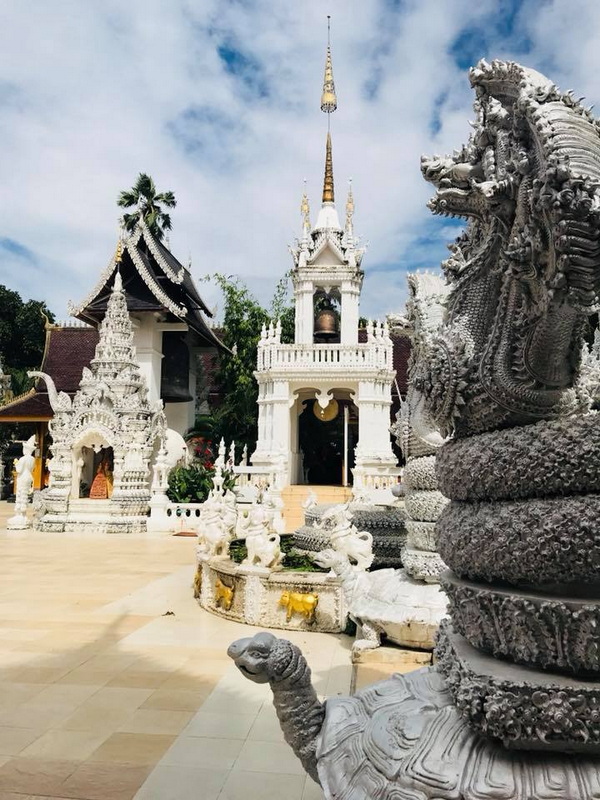
Wat San Pa Yang Luang offers a contrasting setting for examining how religious architecture carries memory. Its value within a wider heritage day lies in the change of visual language: the monument presents a named historical figure in a civic environment, while this temple setting directs attention toward devotional space, design, and long-standing Buddhist practice. Seeing both kinds of place can sharpen awareness of the different ways Lamphun expresses its past.
Kruba Sri Wichai Monument
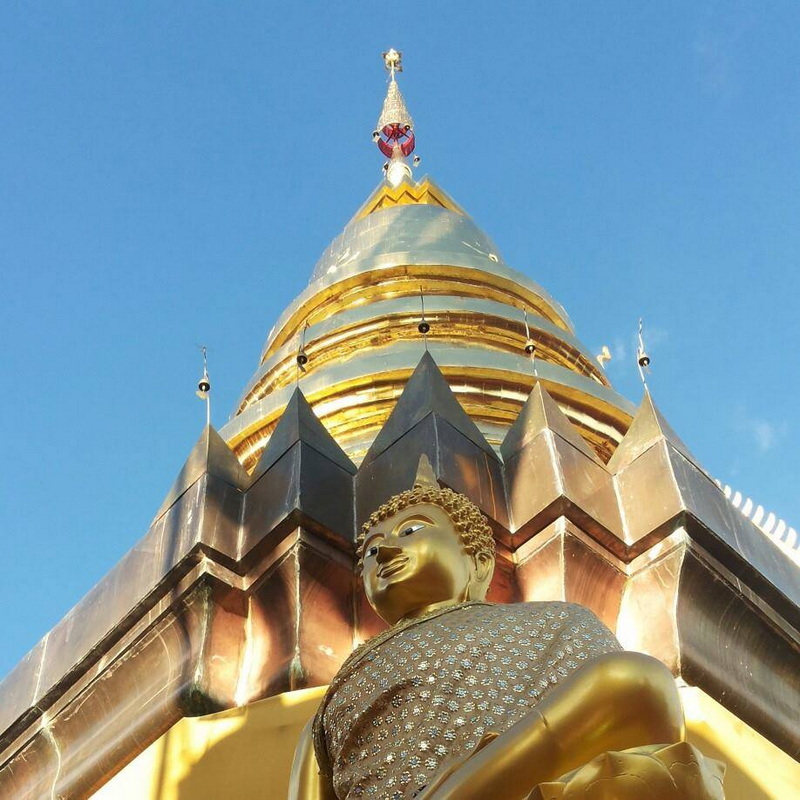
The Kruba Sri Wichai Monument provides another example of public commemoration centered on a respected northern figure. Placed beside the Queen Camadevi memorial in a thoughtfully planned visit, it invites comparison between royal memory and religious memory. The comparison is useful because it shows how statues can represent different forms of leadership, service, and regional attachment within the same cultural landscape.
Looking Ahead to Your Visit
The Cham Dhavi Monument continues to work as a public image because it connects a foundational figure with the routines of modern Lamphun. Its statue, names, and setting give visitors several ways to look: through visual design, historical association, civic use, and local conduct. The clearest final observation is simple: Queen Camadevi is not confined to the past represented by the monument. Her image remains part of how the city marks identity in shared space, where residents pass, visitors pause, and remembrance is kept visible.
