Kho Ku So Bridge and the Practical Route Through Mae Hong Son
Planning an overland visit from Chiang Mai with thoughtful stops around Pai District
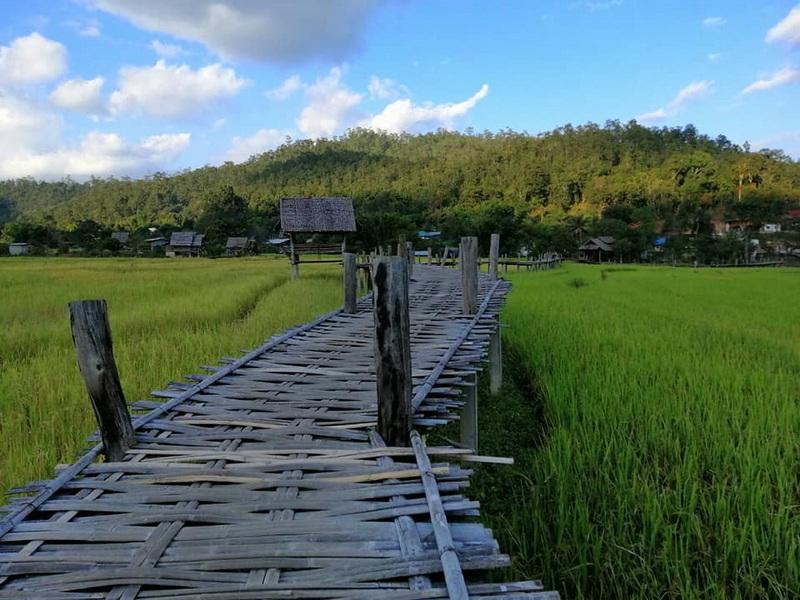
Kho Ku So Bridge, also known as Kho Ku So Bamboo Bridge, is a rural scenic stop in Pai District, Mae Hong Son. Its bamboo walkway crosses cultivated countryside and offers a slower perspective on the landscape than a quick roadside viewpoint. Visitors generally come for the atmosphere: open fields, mountain horizons, seasonal greenery, and the chance to walk respectfully through an area connected with local farming communities. For travelers arriving from Chiang Mai, the bridge is best understood as one part of a longer overland journey rather than an isolated attraction. The route through northern Thailand includes winding mountain roads, changing weather, and several possible pauses around Pai. A well-planned itinerary leaves room for road conditions, daylight, quiet observation, and the needs of residents who use the surrounding land. This guide focuses on how overland travel and Chiang Mai-based agencies can support a visit without turning the experience into a rushed checklist. It also places the bridge alongside Pam Bok Waterfall and Land Split Pai, two nearby stops that can help shape a balanced day in the Pai area.
Approaching Kho Ku So Bridge on an Overland Journey
The overland route from Chiang Mai to Pai and onward through Mae Hong Son is valued for the scenery as much as for the destinations. Roads climb and descend through mountainous terrain, so the journey requires more time and attention than a simple distance calculation might suggest. A stop at Kho Khu So Bamboo Bridge fits naturally into a Pai-area itinerary when the driver or guide allows adequate time for the approach, walking, and onward travel.
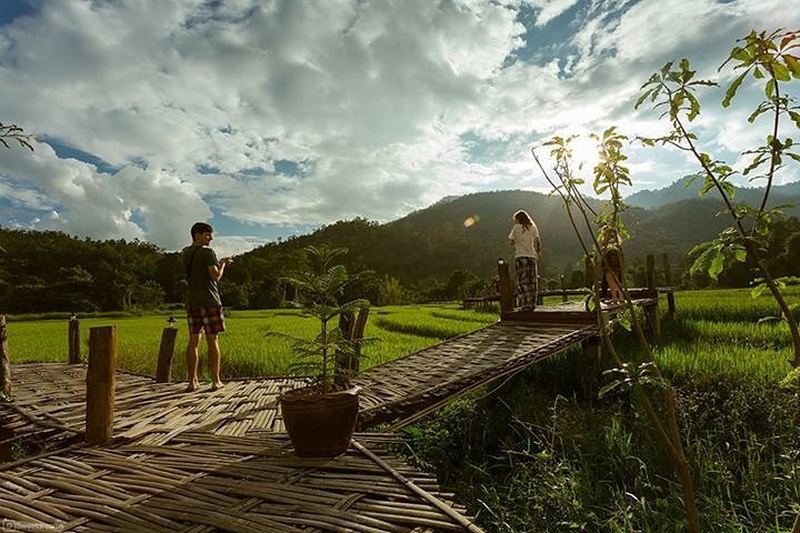
Access is usually planned from Pai rather than treated as a direct city-to-attraction transfer from Chiang Mai. Travelers may use a private vehicle, a hired driver, a shared transport arrangement, or an organized itinerary, depending on their preferences and confirmed arrangements. Because local road conditions, weather, and seasonal access can change, it is sensible to check the current route with a reliable local contact before setting out. Exact opening conditions and transport details should not be assumed from older online descriptions.
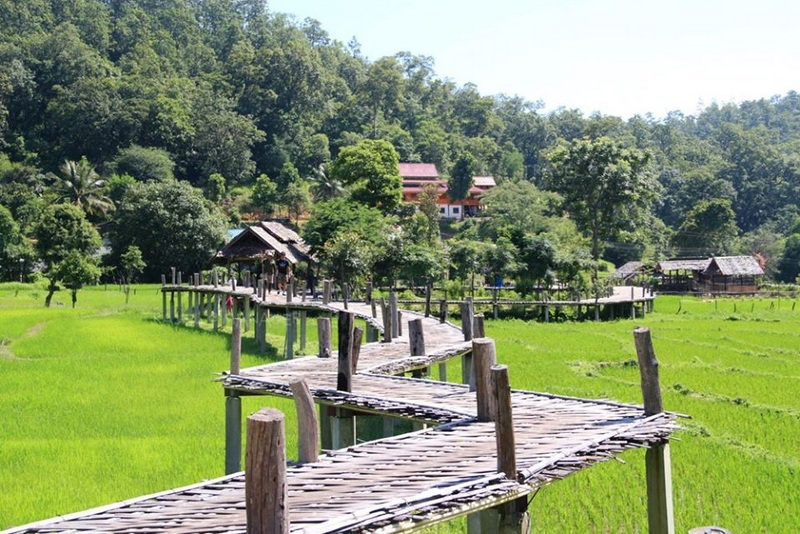
The bridge itself is a walking experience. Comfortable footwear is useful because bamboo surfaces and adjacent paths may be uneven, particularly after rain. Visitors should follow any signs, barriers, or local directions, avoid stepping into planted areas, and keep noise low where the walkway passes close to homes or farmland. The appeal lies in the rural setting, so treating the surroundings as a lived landscape is more appropriate than approaching it like an amusement attraction.
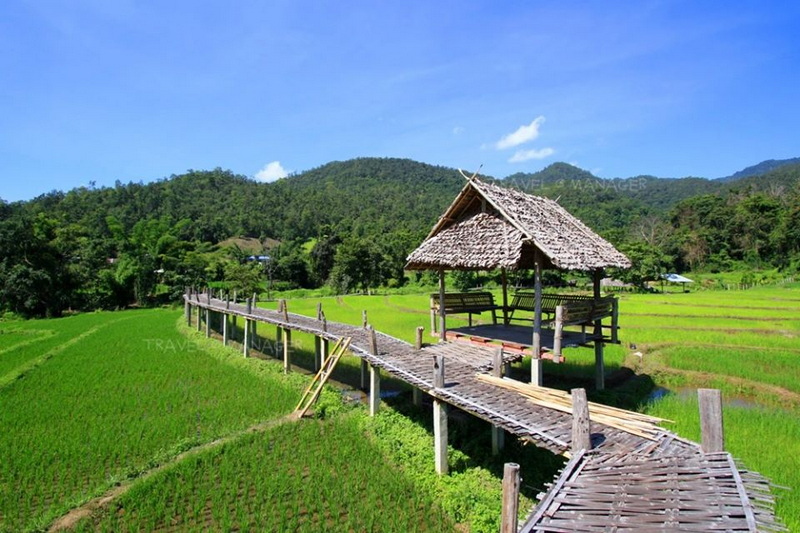
An overland plan also needs a realistic return strategy. Pai District has several scenic places, but fitting too many into one day can make the road journey feel hurried. A practical schedule identifies the main purpose of the visit, leaves a buffer for slower mountain travel, and avoids relying on late-evening driving if the group is unfamiliar with the route.
Natural Detours Along the Pai Section
The bridge is easier to appreciate when the day has a measured pace and does not depend on collecting every possible viewpoint. Two nearby countryside stops can provide useful contrasts, provided the route and conditions are checked locally.
Pam Bok Waterfall
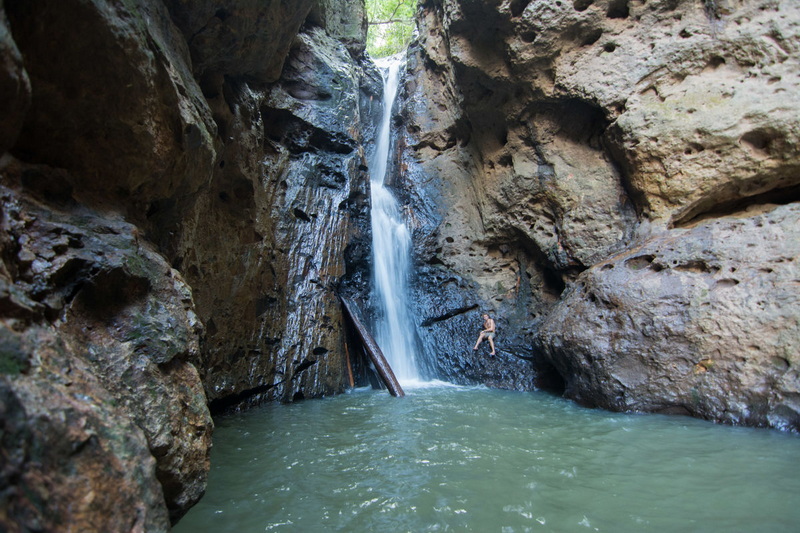
Pam Bok Waterfall offers a different landscape from the open fields around the bridge. Its setting is associated with a narrow, rocky gorge and flowing water, although the strength of the waterfall and the comfort of the surrounding paths depend on recent rainfall and seasonal conditions. Visitors should use care on wet rocks, follow any local safety guidance, and avoid assuming that a photograph from another season represents current conditions.
As part of an overland day, the waterfall is most practical when the route is checked in advance and the group has enough time to walk without rushing. It can provide a refreshing contrast after a warm bridge visit, but travelers should bring suitable footwear and protect personal belongings from spray or rain. Combining both places works best as a flexible plan rather than a promise of a fixed timetable.
Land Split Pai
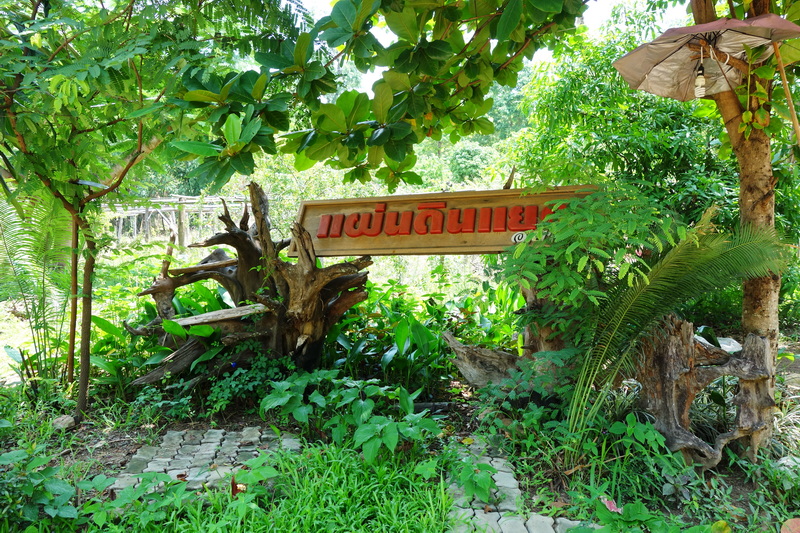
Land Split Pai is a countryside stop known for a visible geological fissure in farmland and for the small-scale agricultural setting around it. The site illustrates how natural changes can become part of a family-run local visitor experience. Its value is not only the unusual ground formation but also the opportunity to observe a rural property where hospitality and farming are closely connected.
Visitors should follow the host’s guidance, stay within accessible areas, and treat any refreshments or local products as optional rather than expected. The site can complement Kho Ku So Bridge because both encourage attention to Pai’s rural landscape, yet they offer different perspectives: one emphasizes a raised walkway through fields, while the other presents a particular feature within cultivated land. A respectful, unhurried visit supports the character of both places.
Two Natural Stops That Extend the Pai Visit
Once the bridge has provided a quiet countryside walk, nearby natural sites can add variety without changing the overall character of the day. The most useful approach is to group stops by direction and available daylight rather than promising a fixed sequence. A local driver or guide can help judge whether the conditions are suitable and whether a particular path is comfortable for the travelers in the vehicle.
What a Travel Agency Chiang Mai Can Contribute
A Travel Agency Chiang Mai can be useful when the main challenge is coordinating a long, winding route rather than simply finding a vehicle. Agency staff may help match travelers with a transport format, identify an appropriate route length, communicate with local drivers, and organize stops around the traveler’s available time. These are planning functions, not guarantees that every requested service will be available on a particular date.
When comparing agencies, ask clear questions before confirming anything. Check whether the proposed plan is a transport arrangement, a guided journey, or a broader itinerary with several stops. Confirm the starting area, approximate travel duration, vehicle suitability, luggage space, language support, and what happens if heavy rain or road disruption affects the route. It is also worth asking whether the bridge visit is an optional stop or a central part of the plan, since that distinction can affect how much time is allocated there.
A useful agency should explain the rhythm of the journey honestly. The road from Chiang Mai through the northern mountains can be tiring for some passengers, especially those prone to motion sickness. Travelers may wish to carry water, light snacks, necessary medication, and a small bag that can remain accessible during the ride. Breaks should be practical and respectful rather than added only to increase the number of locations on an itinerary.
For visitors searching for a Mae Hong Son Overland Tour From Chiang Mai, the most important comparison is often the route logic. Some plans emphasize Pai, while others continue deeper into Mae Hong Son Province and require several travel days. A longer overland itinerary may make the bridge one element among many, whereas a shorter route can give it more attention. Reading the description carefully and discussing priorities with the agency helps prevent a mismatch between expectations and the actual pace.
Independent travelers can also use an agency for selected support instead of purchasing a fully structured journey. For example, they might arrange a transfer between Chiang Mai and Pai, seek local advice for the Pai-area section, or request help coordinating a driver for a particular day. The available options vary, so the key is to describe the desired level of independence and assistance from the beginning.
Practical Conduct for a Rural Bamboo Bridge
Kho Ku So Bamboo Bridge is attractive partly because it connects visitors with a quieter agricultural setting. That setting deserves care. Stay on the intended walkway, do not pick crops or plants, and ask before photographing people, homes, or work areas. A calm presence helps preserve the atmosphere for residents and other visitors. If donation boxes, entrance guidance, or local requests are present, follow the information provided on site rather than relying on assumptions.
Weather can change the character of the visit. In wet conditions, bamboo may be slippery and low paths may become muddy. In hotter months, shade can be limited across open fields, making an earlier or later visit more comfortable if local access conditions permit. Travelers should bring sun protection and water while avoiding disposable waste. If a location is temporarily closed or a path is restricted, accepting that decision is part of responsible travel.
Photography is rewarding here because the bridge, fields, and surrounding hills create simple layers rather than a single dramatic viewpoint. Take time to look beyond the most obvious frame: the texture of bamboo, the geometry of the walkway, and the changing light across cultivated land all contribute to the experience. Quiet observation is often more memorable than trying to document every step.
The bridge can work well for independent travelers who want a modest cultural and landscape stop, but it should not be presented as a substitute for understanding the community around it. A short visit cannot explain local livelihoods in full. Visitors can show respect by avoiding intrusive behavior, supporting legitimate local services where appropriate, and leaving the area as they found it.
Making the Overland Stop Work for You
Kho Ku So Bridge suits travelers who value a quiet rural walk and are willing to let the road journey shape the day. From Chiang Mai, an overland plan should allow realistic mountain travel time, flexible conditions, and respectful pauses around Pai. Local agency support can simplify transport and coordination, but thoughtful questions remain essential before confirming arrangements. With Pam Bok Waterfall and Land Split Pai considered as optional companions rather than rushed additions, the visit can remain practical, calm, and attentive to the landscape and community that give the route its character.

No comments:
Post a Comment